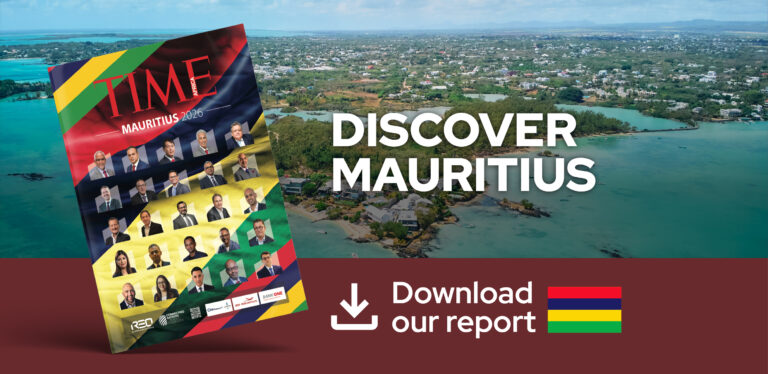
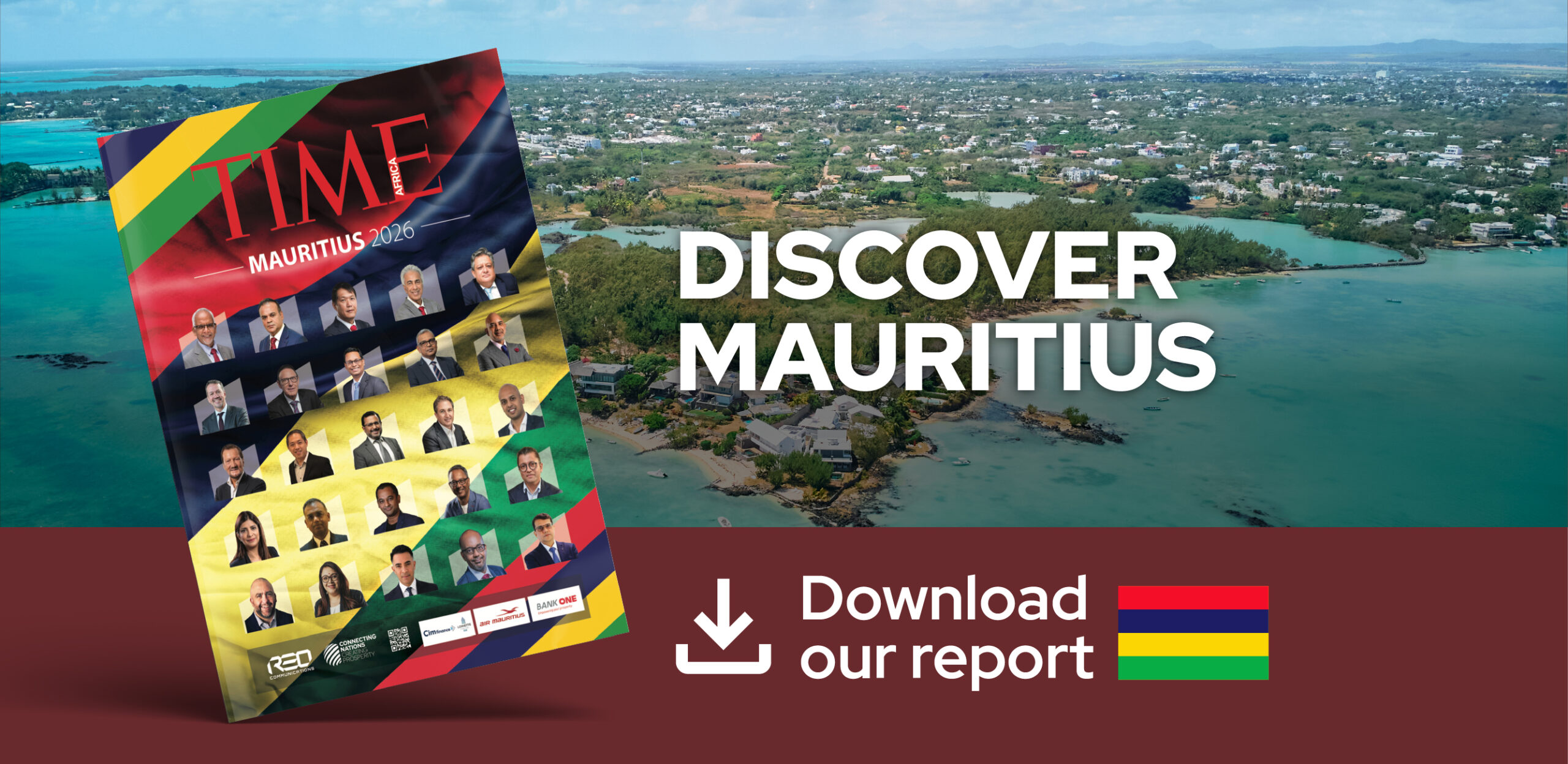
As global capital redraws its routes and supply chains reorganize around resilience, Mauritius is reinforcing its role as a strategic bridge between Africa, Asia, Europe, and the Middle East.
“Investment in education is the most strategic and far-reaching investment any country can make.”
— H.E. Dharambeer Gokhool, G.C.S.K., President of the Republic of Mauritiu
In an age of fractured supply chains and intensifying geopolitical competition, trust has become one of the global economy’s most valuable assets. Stability, predictability, and connectivity carry a premium. Few countries illustrate this shift more clearly than Mauritius. For decades, the Indian Ocean nation has quietly reinvented itself, evolving from a sugar-dependent economy into a diversified center for financial services, tourism, logistics, and international business. Today, it is reinforcing its role as a platform connecting Africa with Asia, Europe, and the Middle East.
Mauritius’ strategic location, however, is only part of the story. Its reputation has been built on strong institutions, legal certainty, and political stability. As Priscilla Balgobin-Bhoyrul, Managing Partner of Dentons Mauritius, observes, investors increasingly seek reassurance that their capital is protected, and Mauritius offers that confidence through a trusted legal framework. The same themes emerge across the financial sector. Faraz Rojid, Chief Executive Officer of Mauritius Finance, notes that investors have become far more selective about where they place their capital and that Mauritius continues to stand out because it offers something many markets struggle to provide consistently: “stability, clarity, and confidence.”
Investing in the One Resource That Matters Most
At the heart of Mauritius’ development lies an enduring belief in education and human capital. President Dharambeer Gokhool’s own journey, from a modest upbringing to the highest office in the land, was shaped by access to education and opportunity, an experience that has convinced him that people remain the country’s greatest asset. “Our greatest competitive advantage is our people: educated, multilingual, adaptable, and hospitable,” he says. As economies compete for talent and technological capability, that investment is proving its worth. The President describes education not merely as a social good but as the foundation of national competitiveness, arguing that “investment in education is the most strategic and far-reaching investment any country can make.”
Mauritius is seeking to build on that legacy through investment in digital literacy, artificial intelligence, and innovation. The private sector sees the same opportunity. Marcelo Aleman, Chief Executive Officer of Emtel, believes the country’s combination of infrastructure and agility creates significant opportunities around digital services, connectivity, fintech, and innovation-driven growth. The challenge now is to ensure those strengths to evolve.
Where Africa Meets the World
The African Continental Free Trade Area is reshaping the commercial geography of the continent, creating one of the world’s largest integrated markets and opening new avenues for trade and investment. Africa’s integration presents an opportunity that Mauritius is particularly well placed to seize. Dhananjay Ramful, Minister of Foreign Affairs, Regional Integration and International Trade, describes the continent as “one of the greatest economic opportunities of the future” and believes Mauritius is uniquely positioned to facilitate the growing flow of capital into Africa, positioning itself as “a stable and reliable platform for investment in Africa.”
Mauritius has spent decades preparing for that role. A sophisticated financial sector, a predictable regulatory environment, and strong international relationships have enabled the country to become an increasingly important bridge between global capital and African opportunity. Ravin Dajee, Managing Director of Absa Bank Mauritius, argues that the country has developed into far more than a tourism destination and today offers investors “a practical and efficient way to access opportunities across Africa” through its well-connected financial and business ecosystem. The same argument is echoed in the logistics sector. Guillaume Adam, General Manager of MFD Logistics, describes Mauritius as “a strategic gateway between Africa, Asia, the Middle East, and Europe,” adding that the island’s geographic position makes it “a natural logistics corridor for East Africa and the Indian Ocean region.”
The opportunity extends far beyond banking and financial services. Mauritius is strengthening its role as a hub for trade, logistics, and international business services, offering companies a stable base from which to engage with some of the world’s fastest-growing markets. As companies diversify supply chains and investment strategies, the island’s combination of stability and connectivity has acquired fresh relevance.
The Indian Ocean’s Rising Importance
Another part of Mauritius’ future lies in the ocean that surrounds it. Although modest in land area, the country possesses an Exclusive Economic Zone of approximately 2.2 million square kilometers, providing vast opportunities in fisheries, logistics, renewable energy, and marine industries. The blue economy is becoming central to the country’s next phase of development. Minister of Agro-Industry, Food Security, Blue Economy, and Fisheries Arvin Boolell believes the Indian Ocean is emerging as one of the world’s most important arenas for trade and connectivity and argues that Mauritius is well positioned to play a larger role in that future. As he puts it, “Mauritius will be the star and key of the Indian Ocean.”
The country is investing in port infrastructure, cargo handling, and food security while developing opportunities in aquaculture, marine conservation, and renewable ocean-based industries, further broadening an economy that has long looked outward.
The Advantage of Reinvention
Mauritius is acutely aware of the challenges posed by climate change, energy transition, and global economic volatility. Yet the country’s response has rarely been to stand still. Periods of disruption have repeatedly prompted Mauritius to adapt and reposition itself, an instinct that can now be seen in investments in renewable energy, climate-smart agriculture, digital infrastructure, and the blue economy. As Minister Boolell observes, “The only factor that remains constant in life is change, and you have to change for the better.”
The island’s success has depended less on scale than on adaptability. As the world economy reorganizes itself around resilience and diversification, many of the qualities Mauritius has spent decades cultivating are finding renewed demand. Political stability, legal certainty, human capital, and international connectivity have become strategic assets precisely because they are increasingly scarce.
In an uncertain world, Mauritius offers something equally scarce: confidence. Confidence in institutions, confidence in the rule of law, and confidence that long-term partnerships can be built on stable ground. As investors search for trusted platforms in a changing global economy, Mauritius is making the case that influence in the twenty-first century will belong not only to the largest economies, but also to those that are stable, connected, and capable of reinvention.

Mauritius in an Era of Economic Realignment
As global capital redraws its routes and supply chains reorganize around resilience, Mauritius is reinforcing its role as a strategic bridge between Africa, Asia, Europe, and the Middle East.